

Bath Filter vs Shower Filter: Which One Do You Need at Home?
Quick answer: A bath filter is designed to reduce chlorine and associated taste and odour in bath water, making it a practical choice for baby baths, children, or anyone who soaks regularly. A shower filter does the same job for running shower water. If you mainly fill a tub, choose a bath filter. If your concern is your daily shower, choose a shower filter. Many households benefit from both, depending on your water conditions.
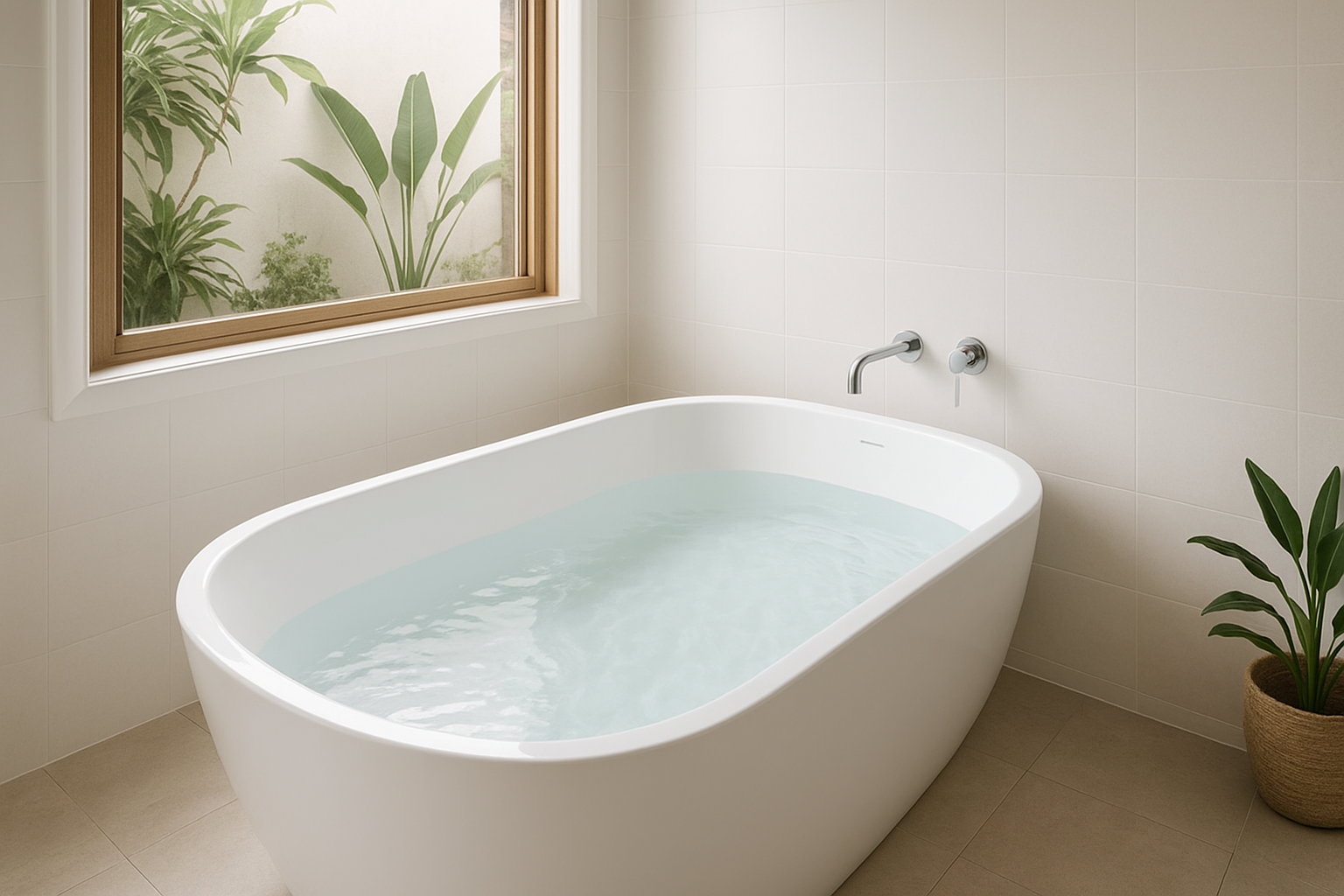
Why the Difference Between a Bath Filter and a Shower Filter Matters
Both products address a similar concern: chlorine and chloramine are commonly used by Australian water utilities to disinfect drinking water before it reaches your tap. That is a necessary and regulated process. However, some households prefer to reduce residual chlorine in the water they bathe or shower in, particularly for young children or people with sensitive routines.
The key difference is how each filter is designed to work. Bath water sits still in a tub; shower water flows continuously through a showerhead. Those two scenarios call for different filter designs, flow rates, and contact times. Understanding that distinction helps you choose the right product rather than buying something that does not suit your actual use.
This article compares bath filters and shower filters side by side, explains how each works, and helps you decide which one, or both, makes sense for your home.
How Chlorine Gets Into Your Bath and Shower Water
Australian water utilities add chlorine or chloramine to town water as a disinfectant. This is a standard, regulated practice governed by the Australian Drinking Water Guidelines published by the National Health and Medical Research Council (NHMRC). The guidelines set maximum acceptable values for disinfectant residuals to balance microbial safety with aesthetic quality.
Chlorine in bath water
When you fill a bath, the chlorine present in your mains supply enters the tub along with the water. Because bath water is static, the chlorine does not dissipate as quickly as it might in a flowing stream. The concentration depends on your local water supply and how far you are from the treatment plant. Your state or territory water authority publishes annual water quality reports that show typical chlorine residual levels in your area.
Chlorine in shower water
Shower water flows continuously and at higher temperatures than a typical bath. Warm water can cause chlorine to volatilise more readily into the air of an enclosed shower space. The total volume of water used in a shower is generally lower than a full bath, but the flow is constant and the exposure is ongoing throughout the shower duration.
Why filter design differs
A bath filter must handle a large volume of water in a short fill time, often several hundred litres, while maintaining enough contact time with the filter media to reduce chlorine effectively. A shower filter, by contrast, handles a continuous but lower flow rate and must work inline between the water supply and the showerhead. The filter media, housing, and flow-rate ratings are engineered differently for each application. Checking the product specifications for your chosen filter is the best way to understand its rated capacity and performance under your water conditions.
Bath Filter vs Shower Filter: Side-by-Side Comparison
The table below summarises the main differences to help you compare at a glance. Performance depends on your local water conditions and the specific product specifications.
| Feature | Bath Filter | Shower Filter |
|---|---|---|
| Primary use | Filling a bathtub | Running shower water |
| Water flow type | High volume, short burst (bath fill) | Continuous lower flow rate |
| Installation | Attaches to bath tap or spout | Inline between shower arm and showerhead |
| Designed to reduce | Chlorine, sediment, taste and odour (check specs) | Chlorine, sediment, taste and odour (check specs) |
| Typical users | Families with babies or young children, regular bathers | Daily shower users, anyone concerned about shower water quality |
| Filter media contact time | Engineered for high-volume, fast fill | Engineered for continuous flow at shower pressure |
| Cartridge replacement | Based on volume or time (check product specs) | Based on volume or time (check product specs) |
How to Choose: Bath Filter, Shower Filter, or Both
The right choice depends on where in your home you want to reduce chlorine and associated taste and odour. Work through the checklist below to narrow it down.
- Consider a bath filter if you regularly fill a bathtub, you bathe young children or babies, or your main concern is the large volume of water in a tub rather than your daily shower.
- Consider a shower filter if your household showers daily and you want to reduce chlorine in the water flowing through your showerhead, or you notice a strong chlorine smell in your shower.
- Consider both if your household uses both the bath and the shower regularly and you want to address chlorine in each setting separately.
- Check your local water report to understand the typical chlorine residual in your area. Your state or territory water authority publishes this data annually.
- Check the product specifications for rated flow rate, cartridge life, and the water constituents each filter is designed to reduce, so you can match the product to your actual usage.
- Consider compatibility with your existing tap or shower arm fittings before purchasing. Most filters include standard adaptors, but it is worth confirming.
- Think about cartridge replacement frequency and cost over time, not just the upfront price of the filter unit.
Evolved H2O Filters for Bath and Shower
Evolved H2O offers a dedicated filter for each application, both designed to reduce chlorine and associated taste and odour depending on your water conditions.
- Evolved H2O Advanced Bath Filter - A bath filter designed to reduce chlorine, sediment, and associated taste and odour when filling your bathtub. Check the product specifications for rated capacity and cartridge life.
- Evolved H2O Advanced Shower Filter - An inline shower filter designed to reduce chlorine and associated taste and odour in running shower water. Fits between your shower arm and showerhead. Check the product specifications for flow rate and cartridge life.
Not sure which is right for your home? Use the product finder below to match the right Evolved H2O filter to your situation.
Which Evolved H2O Filter Is Right for You?
Different areas of the home need different types of filtration. Use this quick guide to match the right Evolved H2O option to the water problem you are trying to solve.
-

For bath water
Advanced Bath Filter
Choose this if your focus is bath water for babies, kids, or sensitive skin routines, and you want a simple option designed for bath use.
View the Advanced Bath Filter -

For shower water
Advanced Shower Filter
Choose this if your main concern is chlorine taste and odour in warm shower water, or you want a simple inline filter between your shower arm and showerhead.
View the Advanced Shower Filter -

For tap drinking water
Advanced Tap Filter
Choose this if you want a compact tap filter for everyday drinking and cooking water, without changing your full plumbing setup.
View the Advanced Tap Filter -

For fluoride-focused filtration
HydroX Electric Water Filter
Choose this if fluoride reduction is a priority. HydroX is the Evolved H2O option designed for more advanced countertop drinking-water filtration.
View the HydroX Electric Water Filter
Frequently Asked Questions
Can I use a shower filter on my bath tap?
Generally, no. Shower filters are engineered for the continuous flow rate and pressure of a showerhead connection. A bath tap delivers a much higher volume of water in a short time, which can exceed the rated flow of a shower filter and reduce its effectiveness. A bath filter is specifically designed for the high-volume, fast-fill demands of a bathtub. Check the product specifications before attempting to use either filter outside its intended application.
Do bath and shower filters remove fluoride?
Standard bath and shower filters are not designed to reduce fluoride. They are primarily designed to reduce chlorine, sediment, and associated taste and odour. Fluoride reduction typically requires a different filtration technology, such as activated alumina or reverse osmosis, used in a drinking-water filter. If fluoride reduction is a priority for your drinking water, check the specifications of a dedicated drinking-water filter such as the Evolved H2O HydroX Electric Water Filter.
How often do I need to replace the filter cartridge?
Cartridge life varies by product and depends on your local water conditions, usage volume, and the specific filter model. Check the product specifications for the rated cartridge life in litres or months. As a general guide, higher chlorine levels or sediment in your water may reduce cartridge life compared to the rated figure. Following the manufacturer's replacement schedule helps maintain the filter's designed performance.
Are these filters suitable for babies and young children?
Bath and shower filters are not medical devices and are not intended to diagnose, treat, cure, or prevent any disease or condition. They are designed to reduce chlorine and associated taste and odour in water, depending on your water conditions. If you have specific health concerns about water quality for infants or young children, consult a healthcare professional and your local water authority for guidance on your area's water quality.
Will a bath or shower filter affect my water pressure?
Most bath and shower filters are designed to work within standard household water pressure ranges with minimal impact on flow. However, a partially blocked or end-of-life cartridge can reduce flow rate. Check the product specifications for the rated pressure range and replace cartridges on schedule to maintain performance.
What is the difference between chlorine and chloramine, and do these filters address both?
Chlorine and chloramine are both disinfectants used by water utilities, though chloramine is more persistent and harder to reduce than free chlorine. Some filter media, such as catalytic carbon, are designed to address chloramine as well as chlorine. Check the product specifications for the specific water constituents each filter is designed to reduce, as performance varies by filter media and design.
Key Takeaways
- Bath filters and shower filters both target chlorine and associated taste and odour, but are engineered for different water flow conditions.
- Choose a bath filter if your main concern is the large volume of water in a bathtub, particularly for young children or regular bathers.
- Choose a shower filter if your focus is your daily shower and the continuous flow of water through your showerhead.
- Many households benefit from both, depending on their routines and water conditions.
- Always check the product specifications and your local water authority's annual water quality report to make an informed choice.
Sources and Further Reading
- Australian Drinking Water Guidelines - National Health and Medical Research Council (NHMRC)
- Guidelines for Drinking-water Quality, 4th Edition - World Health Organization (WHO)
- Drinking Water Quality - WaterNSW
