

What is PFAS in water?
Quick answer: PFAS (per- and polyfluoroalkyl substances) are a large group of manufactured chemicals used in many industrial and consumer products since the 1950s. Because they break down very slowly, they can accumulate in the environment and in water supplies. Australian drinking water guidelines now set specific health-based guideline values for four key PFAS compounds, and water authorities monitor for them in treated supplies.
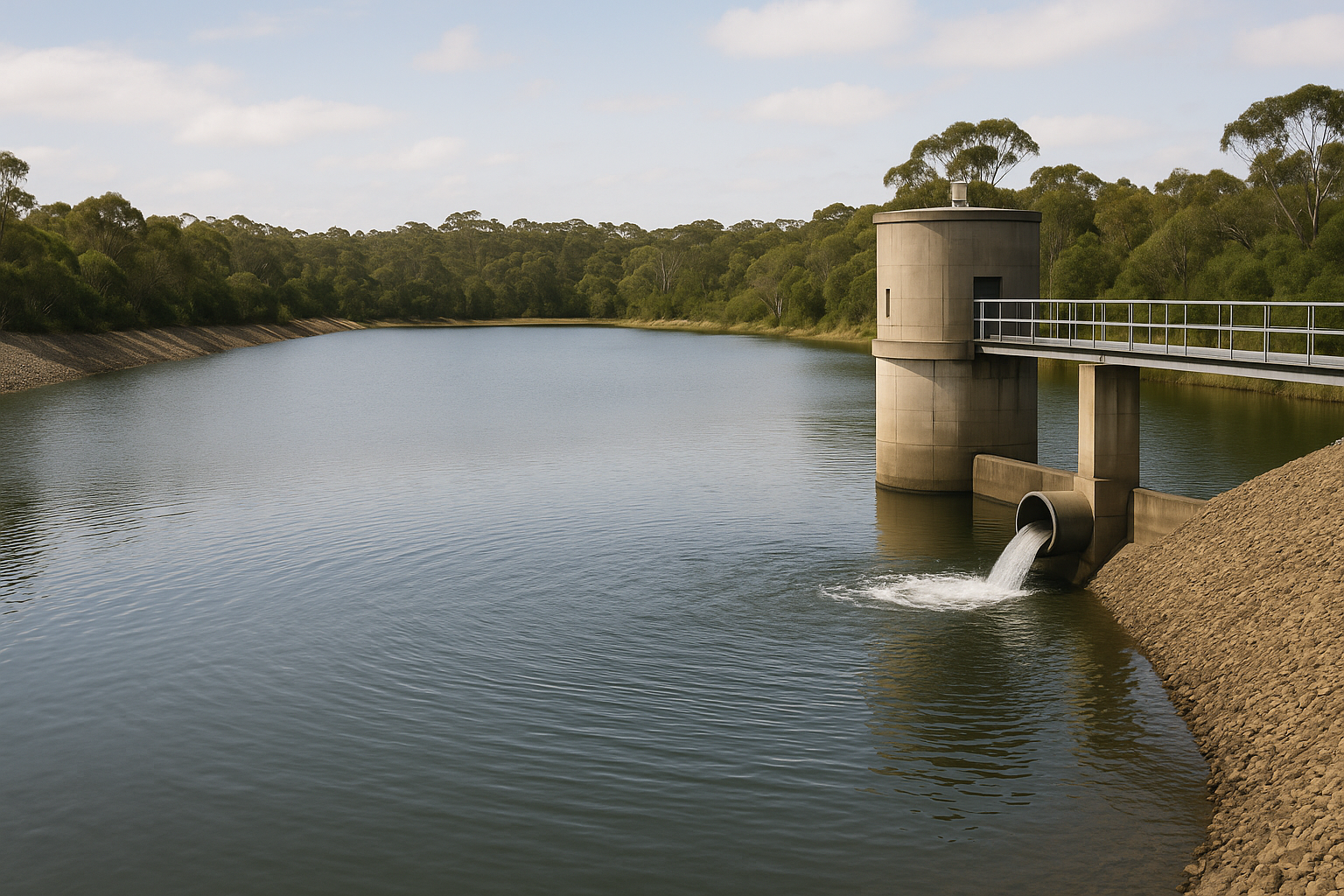
What are PFAS and why are they in water?
PFAS stands for per- and polyfluoroalkyl substances. They are a broad family of thousands of synthetic chemicals that share a strong carbon-fluorine bond, which makes them highly resistant to heat, water, and chemical breakdown. That durability is why they were widely used in products such as non-stick cookware coatings, stain-resistant fabrics, food packaging, firefighting foams, and industrial processes.
Because PFAS do not break down readily in the environment, they can travel from manufacturing sites, airports, military bases, and landfills into groundwater and surface water. From there, they can enter drinking water treatment systems. NHMRC reviewed guidance on PFAS in drinking water from 2023 to 2025 as part of an update to the Australian Drinking Water Guidelines, reflecting growing scientific understanding of these compounds.
Not all PFAS are the same. The most studied are PFOS (perfluorooctane sulfonic acid), PFOA (perfluorooctanoic acid), PFHxS (perfluorohexane sulfonic acid), and PFBS (perfluorobutane sulfonic acid). Each has different properties and a different level of concern for drinking water.
What do Australian guidelines say about PFAS in drinking water?
Australia now has individual health-based guideline values for four PFAS compounds, updated in 2025. According to NHMRC, new and revised health-based guideline values have been developed for the following PFAS to reduce health risks from exposure to these chemicals in Australian drinking water.
The current values, as stated by NHMRC, are:
- PFOA: 200 ng/L
- PFOS: 8 ng/L
- PFHxS: 30 ng/L
- PFBS: 1,000 ng/L
These values replaced earlier interim guidance. For context, NHMRC notes that in August 2018 it published health-based guideline values for three PFAS (PFOS combined with PFHxS, and PFOA) in the Australian Drinking Water Guidelines. The previous combined PFOS guideline value of 70 ng/L was a historical figure and is no longer current; the adopted value for PFOS is now 8 ng/L.
The Australian Drinking Water Guidelines were updated in June 2025 to include revised health-based guideline values for PFOA and PFOS, a separate guideline value for PFHxS, and a new guideline value for PFBS. A dedicated PFAS Chemical Fact Sheet and a general PFAS Fact Sheet have also been developed as part of this update.
How do PFAS get into tap water?
PFAS reach drinking water through several pathways. Industrial discharge, the use of aqueous film-forming foam (AFFF) at airports and defence sites, and leaching from landfill sites are among the most common sources in Australia. Once PFAS enter groundwater or surface water catchments, conventional water treatment processes do not reliably break them down, which is why monitoring and guideline values matter.
Australian state and territory water authorities test treated drinking water against the guideline values set by NHMRC. If you are on a reticulated supply, your water utility publishes annual water quality reports that include PFAS data where relevant. If you rely on rainwater tanks or private bores near known contamination sites, it is worth checking with your local authority.
Comparing approaches to PFAS in household water
| Approach | How it works | PFAS relevance | Notes |
|---|---|---|---|
| Boiling | Heats water to 100 degrees Celsius | Does not address PFAS | Effective for some microbiological concerns; not relevant for PFAS |
| Standard pitcher filters (basic carbon) | Passes water through activated carbon | Variable; depends on media and contact time | Check product specifications for PFAS claims |
| Tap-mounted filter | Inline filtration at the tap | Depends on filter media and product claims | Convenient; check product specifications |
| Electric countertop filter | Multi-stage filtration with powered flow | Higher-performance options available | Suited to households prioritising PFAS reduction |
| Glass filter jug | Gravity filtration through replaceable cartridge | Depends on cartridge media and product claims | Plastic-free jug option; check product specifications |
How to choose a water filter if PFAS is your concern
If PFAS in your drinking water is a priority, consider the following when choosing a filtration option for your home.
- Check your local water report first. Your state or territory water authority publishes annual quality data. Knowing whether PFAS has been detected in your supply helps you decide how much filtration you need.
- Look for a product with a specific PFAS claim. Not every filter is designed to target PFAS. Choose a product whose manufacturer states a PFAS claim clearly.
- Consider your usage volume. A countertop electric filter suits households that want higher-volume filtered drinking water. A filter jug suits smaller daily volumes. A tap filter is convenient for everyday cooking and drinking at the sink.
- Think about cartridge replacement. Filter performance depends on regular cartridge changes. Factor in how often you will need to replace the cartridge for your chosen product.
- Match the filter to the water point. Drinking water filters address the water you consume. Shower and bath filters serve a different purpose and are not drinking water devices.
Evolved H2O options for PFAS in drinking water
If PFAS reduction in your drinking water is a priority, Evolved H2O offers three products with specific PFAS claims.
- Evolved H2O HydroX Electric Water Filter reduces Total PFAS with a tested reduction of greater than 99.22%. This is the Evolved H2O option for households where PFAS reduction is the primary concern.
- Evolved H2O Glass Water Filter Jug reduces PFAS at 98.1%, in a premium borosilicate glass, BPA-free jug designed for everyday filtered drinking water.
- Evolved H2O Advanced Tap Filter targets PFAS, Heavy Metals, Microplastics and Chlorine at the tap, making it a practical everyday option for the kitchen sink.
All three products address PFAS in drinking water. The right choice depends on your household volume needs and where you want filtered water in your home.
Which Evolved H2O Filter Is Right for You?
Different areas of the home need different types of filtration. Use this quick guide to match the right Evolved H2O option to the water problem you are trying to solve.
-

For tap drinking water
Advanced Tap Filter
Choose this if you want a compact tap filter for everyday drinking and cooking water, without changing your full plumbing setup.
View the Advanced Tap Filter -

For shower water
Advanced Shower Filter
Choose this if your main concern is chlorine taste and odour in warm shower water, or you want a simple inline filter between your shower arm and showerhead.
View the Advanced Shower Filter -

For bath water
Advanced Bath Filter
Choose this if your focus is bath water for babies, kids, or sensitive skin routines, and you want a simple option designed for bath use.
View the Advanced Bath Filter -

For fluoride-focused filtration
HydroX Electric Water Filter
Choose this if fluoride reduction is a priority. HydroX is the Evolved H2O option designed for more advanced countertop drinking-water filtration.
View the HydroX Electric Water Filter -

For everyday filtered water
Glass Water Filter Jug
Choose this if you want a glass water filter jug for everyday drinking water, with a plastic-free jug design and simple refill cartridge setup.
View the Glass Water Filter Jug
Frequently Asked Questions
What does PFAS stand for?
PFAS stands for per- and polyfluoroalkyl substances. They are a large group of thousands of manufactured chemicals that share a strong carbon-fluorine bond, making them highly resistant to breakdown in the environment. The most studied in drinking water are PFOS, PFOA, PFHxS, and PFBS.
Are PFAS in Australian tap water?
PFAS have been detected in some Australian water supplies, particularly near industrial sites, airports, and defence bases where firefighting foams were used. Most reticulated water supplies are monitored against the health-based guideline values set by NHMRC. Check your local water authority's annual report for data specific to your area.
What are the current Australian guideline values for PFAS in drinking water?
According to NHMRC, the current health-based guideline values are: PFOA at 200 ng/L, PFOS at 8 ng/L, PFHxS at 30 ng/L, and PFBS at 1,000 ng/L. These values were updated in 2025 and replaced earlier interim guidance.
Does boiling water remove PFAS?
Boiling water does not address PFAS. Because PFAS are chemically stable and do not evaporate at boiling temperatures, heating water to 100 degrees Celsius has no meaningful effect on PFAS levels. If PFAS reduction is your goal, a purpose-designed filtration product is the relevant option.
Which Evolved H2O filter is best for PFAS?
The HydroX Electric Water Filter has the highest stated PFAS reduction among Evolved H2O products, at greater than 99.22% tested reduction. The Glass Water Filter Jug reduces PFAS at 98.1%, and the Advanced Tap Filter targets PFAS at the tap.
Do shower or bath filters address PFAS in drinking water?
Shower and bath filters are not drinking water devices and are not the right tool for addressing PFAS in the water you consume. If PFAS in your drinking water is the concern, choose a tap filter, countertop electric filter, or filter jug designed for drinking water use.
Key takeaways
- PFAS are a large family of manufactured chemicals that persist in the environment and can enter drinking water supplies.
- Australia updated its health-based guideline values for PFAS in 2025, with individual values now set for PFOA, PFOS, PFHxS, and PFBS.
- Boiling water does not address PFAS; purpose-designed filtration is the relevant household option.
- Evolved H2O offers three products with specific PFAS claims: the HydroX Electric Water Filter, the Glass Water Filter Jug, and the Advanced Tap Filter.
- Check your local water authority's annual report to understand PFAS levels in your area.
Sources
- NHMRC Review of PFAS in Australian drinking water | NHMRC
- Questions and answers on review of PFAS in drinking water | NHMRC
- Australian Drinking Water Guidelines | NHMRC
