

Why Does Tap Water Sometimes Smell or Taste Different?
Quick answer: Australian tap water is treated with chlorine or chloramine to meet drinking water standards, but these disinfectants, along with sediment, pipe age and seasonal changes, can affect how your water smells and tastes. A tap water filter at the point of use is designed to reduce chlorine, sediment and associated taste and odour, depending on your water conditions and the filter you choose.
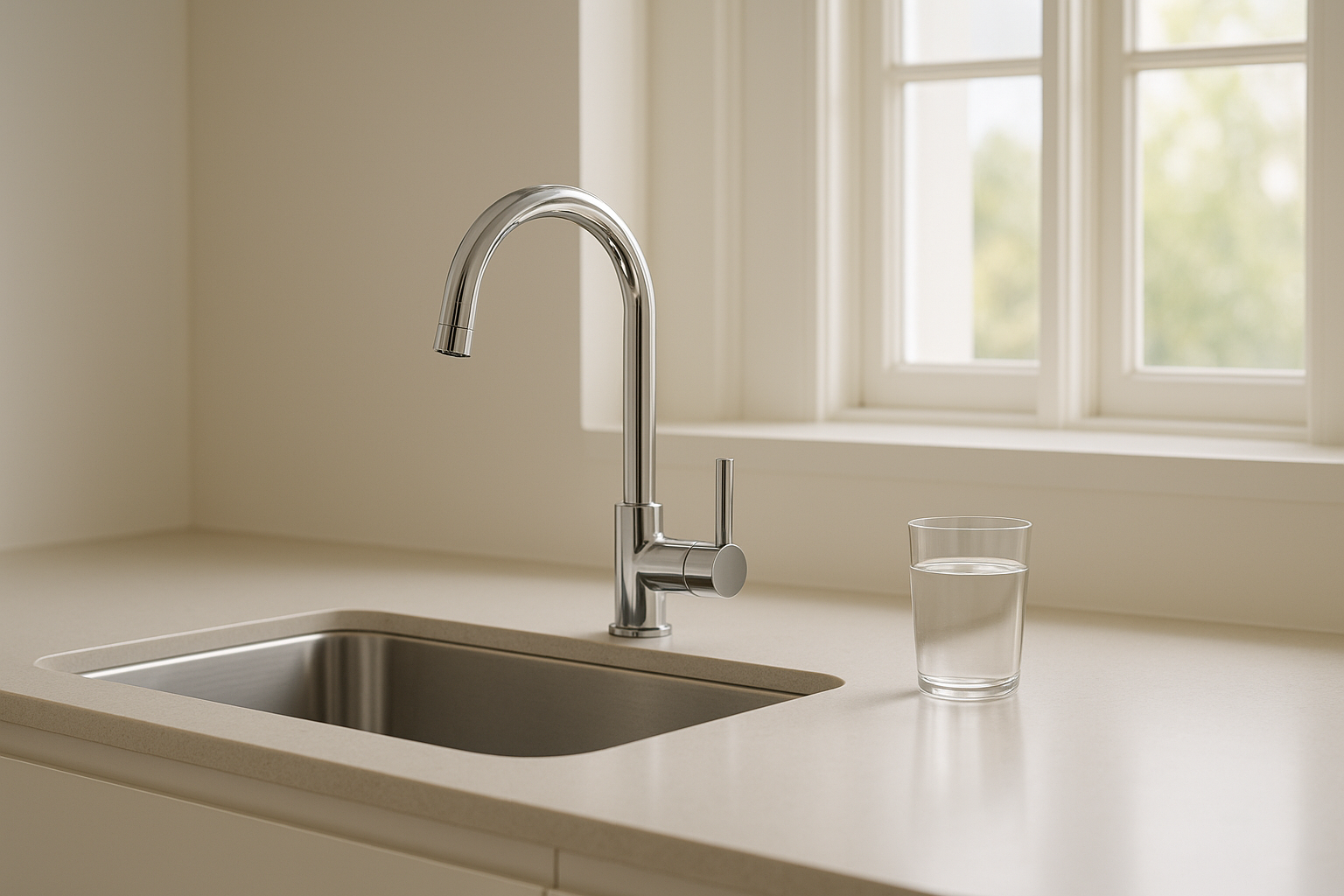
Why Australian tap water can smell or taste different
Australian tap water meets the Australian Drinking Water Guidelines, which set limits for hundreds of physical, chemical and microbiological parameters. Meeting those guidelines does not mean every glass of water will taste neutral or odour-free. Several factors influence what you notice at the tap.
Chlorine and chloramine disinfection
Water utilities across Australia add chlorine or chloramine to drinking water as a disinfectant to keep it safe through the distribution network. The Australian Drinking Water Guidelines (ADWG) set an aesthetic guideline value for chlorine at 0.6 mg/L based on taste and odour, though residual levels in the network can vary. Chloramine, a combination of chlorine and ammonia, is used by some utilities because it is more stable over long pipe distances. Both compounds can produce a noticeable chemical smell or taste, particularly in warm water or when water has been sitting in pipes.
Sediment and pipe conditions
Older pipes, both in the street network and inside homes, can contribute fine particles, rust or mineral deposits to tap water. These do not necessarily indicate a safety problem, but they can affect taste, colour and clarity. Sediment levels can also increase temporarily after heavy rain or maintenance work on the local network.
Seasonal and source-water changes
Water utilities often blend water from different catchments or switch sources seasonally. Changes in source water can alter the mineral profile and the amount of disinfectant needed, which in turn affects taste. Algal blooms in reservoirs can also introduce earthy or musty compounds such as geosmin, which are detectable at very low concentrations even when water is otherwise safe to drink.
Hot-water systems and household plumbing
Water that has sat in a hot-water system or in copper or older pipes inside the home can pick up metallic notes or develop a stale taste. Running the cold tap for a few seconds before filling a glass often helps, but it does not address the underlying chemistry of the water itself.
How different filtration options compare
If you want to reduce chlorine taste and odour at home, three common options are a tap filter, a filter jug and an under-sink system. Each suits a different situation.
| Filter type | Installation | Typical use case | Cartridge maintenance | Upfront effort |
|---|---|---|---|---|
| Tap filter (point-of-use) | Attaches directly to the tap; no plumbing required | Everyday drinking and cooking water at the kitchen tap | Periodic cartridge replacement; check product specifications | Low; fits most standard taps |
| Filter jug (glass or plastic) | No installation; sits on bench or in fridge | Smaller volumes of filtered drinking water; portable | Regular cartridge replacement; check product specifications | Very low; no fitting required |
| Under-sink filter | Plumbed under the sink; dedicated tap or existing tap | Higher-volume filtered water; hidden installation | Annual or periodic cartridge service; check product specifications | Higher; typically requires a plumber |
A tap filter is often the most practical starting point for Australian households: it requires no plumbing, delivers filtered water on demand, and is straightforward to maintain. A glass filter jug suits smaller households or renters who want a portable option. An under-sink system suits households with higher volume needs or those who prefer a hidden installation, but the upfront effort and cost are greater.
How to choose the right tap water filter for your home
The right filter depends on your water conditions, your household size and what you are trying to address. Consider the following before buying.
- Check your local water report. Your state or territory water authority publishes annual water quality reports. These show the disinfectant type (chlorine or chloramine), typical residual levels and any seasonal notes. This tells you what you are actually filtering.
- Match the filter to the contaminant. Most tap filters use activated carbon, which is well suited to reducing chlorine, chloramine and associated taste and odour. If sediment is a concern, look for a filter that includes a sediment stage. Check the product specifications for what each filter is designed to reduce.
- Consider flow rate and tap compatibility. Tap filters attach to the aerator thread of your tap. Check that the filter is compatible with your tap fitting before purchasing. Flow rate through the filter should still be practical for filling a kettle or pot.
- Think about cartridge life and replacement cost. Cartridge life varies by product and by how much water you use. Factor in the ongoing cost of replacement cartridges, not just the upfront price of the filter unit.
- Household size and volume. A filter jug may suit one or two people. A tap filter or under-sink system is generally more practical for families who use larger volumes of filtered water daily.
- Fluoride considerations. Standard tap filters and filter jugs are not designed to reduce fluoride. If fluoride reduction is a priority for your household, the Evolved H2O HydroX Electric Water Filter is the Evolved H2O option designed for more advanced filtration that may help reduce fluoride; check the product specifications for details.
Evolved H2O tap filtration options
For everyday drinking and cooking water at the kitchen tap, the Evolved H2O Advanced Tap Filter is a compact point-of-use filter designed to reduce chlorine, sediment and associated taste and odour at the tap, depending on your water conditions. It attaches directly to a standard tap with no plumbing required, making it a practical option for most Australian households.
If you prefer a portable, plastic-free option for the bench or fridge, the Evolved H2O Glass Water Filter Jug is a borosilicate glass, BPA-free jug designed for everyday filtered drinking water at home, with a replaceable filter cartridge and no installation needed.
Both options use replaceable cartridges. Check the product specifications for cartridge life, compatibility and what each filter is designed to reduce for your water conditions.
Which filter suits your situation?
- Chlorine taste or odour at the kitchen tap: Evolved H2O Advanced Tap Filter
- Portable or bench-top filtered drinking water: Evolved H2O Glass Water Filter Jug
- Fluoride-focused filtration: Evolved H2O HydroX Electric Water Filter
- Chlorine in shower water: Evolved H2O Advanced Shower Filter
- Chlorine in bath water: Evolved H2O Advanced Bath Filter
Which Evolved H2O Filter Is Right for You?
Different areas of the home need different types of filtration. Use this quick guide to match the right Evolved H2O option to the water problem you are trying to solve.
-

For tap drinking water
Advanced Tap Filter
Choose this if you want a compact tap filter for everyday drinking and cooking water, without changing your full plumbing setup.
View the Advanced Tap Filter -

For shower water
Advanced Shower Filter
Choose this if your main concern is chlorine taste and odour in warm shower water, or you want a simple inline filter between your shower arm and showerhead.
View the Advanced Shower Filter -

For bath water
Advanced Bath Filter
Choose this if your focus is bath water for babies, kids, or sensitive skin routines, and you want a simple option designed for bath use.
View the Advanced Bath Filter -

For fluoride-focused filtration
HydroX Electric Water Filter
Choose this if fluoride reduction is a priority. HydroX is the Evolved H2O option designed for more advanced countertop drinking-water filtration.
View the HydroX Electric Water Filter -

For everyday filtered water
Glass Water Filter Jug
Choose this if you want a glass water filter jug for everyday drinking water, with a plastic-free jug design and simple refill cartridge setup.
View the Glass Water Filter Jug
Frequently Asked Questions
Why does my tap water smell like chlorine?
Australian water utilities add chlorine or chloramine to drinking water as a disinfectant to keep it safe through the distribution network. The smell is most noticeable when residual chlorine levels are higher, when water is warm, or when water has been sitting in pipes. A tap water filter using activated carbon is designed to reduce chlorine and associated odour at the point of use, depending on your water conditions.
Is Australian tap water safe to drink?
Yes. Australian tap water is treated and monitored to meet the Australian Drinking Water Guidelines, which are set by the National Health and Medical Research Council. A taste or odour difference does not necessarily indicate a safety problem. If you have specific concerns about your local water supply, contact your state or territory water authority or check their published water quality report.
Will a tap filter remove fluoride?
Standard tap filters and filter jugs are not designed to reduce fluoride. If fluoride reduction is a priority, the Evolved H2O HydroX Electric Water Filter is the Evolved H2O option that may help reduce fluoride; check the product specifications for details. No fluoride reduction claim is made for the Evolved H2O Advanced Tap Filter or the Glass Water Filter Jug.
What is the difference between a tap filter and a filter jug?
A tap filter attaches directly to your kitchen tap and delivers filtered water on demand without any storage step. A filter jug sits on the bench or in the fridge and filters water into a reservoir that you pour from. Tap filters suit higher daily volumes and households that want filtered water instantly at the tap. Filter jugs suit smaller households or renters who want a portable, no-installation option.
How often do I need to replace the filter cartridge?
Cartridge life varies by product and by how much water you use. Check the product specifications for the recommended replacement interval for your specific filter. Using a cartridge beyond its rated life may reduce its effectiveness at reducing chlorine, sediment and taste and odour issues.
Can a tap filter help with sediment or cloudy water?
Many tap filters include a sediment stage designed to reduce fine particles that can affect clarity and taste. Check the product specifications to confirm whether the filter you are considering includes sediment reduction and what particle sizes it is designed to address. Sediment levels can increase temporarily after heavy rain or local network maintenance.
Does a tap filter work with all taps?
Most tap filters attach to the aerator thread of a standard kitchen tap. Compatibility can vary depending on your tap fitting type. Check the product specifications and compatibility information before purchasing to confirm the filter will fit your tap.
Key takeaways
- Chlorine and chloramine disinfection, sediment, pipe conditions and seasonal source-water changes are the most common reasons Australian tap water smells or tastes different.
- A tap water filter using activated carbon is designed to reduce chlorine, sediment and associated taste and odour at the point of use, depending on your water conditions.
- Tap filters, filter jugs and under-sink systems each suit different household sizes, budgets and installation preferences; check product specifications before choosing.
- Standard tap filters and filter jugs are not designed to reduce fluoride; the HydroX Electric Water Filter is the Evolved H2O option for fluoride-focused filtration.
- Always check your local water authority's annual water quality report to understand what is in your tap water before choosing a filter.
Citations and sources
- Australian Drinking Water Guidelines - National Health and Medical Research Council (NHMRC)
- Guidelines for Drinking-water Quality, 4th Edition - World Health Organization (WHO)
- Water Quality - WaterNSW
- Basic Information about Disinfection Byproducts in Drinking Water - US EPA
