Quick answer: Cloudy hot water is almost always caused by dissolved air that forms tiny bubbles when water is heated, or by fine sediment and particles disturbed by temperature changes in your pipes or hot water system. The cloudiness typically clears from the bottom of a glass upward within a minute or two if air is the cause. Sediment-related cloudiness may settle more slowly or persist.

Why does hot water go cloudy?
Hot water looks cloudy because heating changes the physical behaviour of water. Cold water holds dissolved gases, mainly air, under pressure. When that water is heated, the gases come out of solution and form microscopic bubbles. Those bubbles scatter light, giving the water a white or milky appearance. This is the same principle behind the bubbles that form on the inside of a pot before it reaches a full boil.
A second cause is fine sediment or particles. Hot water systems, storage tanks, and older pipes can accumulate mineral deposits, rust flakes, or fine grit over time. Heat and pressure changes can disturb those particles and carry them into your tap water, producing a cloudiness that does not clear as quickly as air bubbles do.
The simplest test is to fill a clear glass and watch it for one to two minutes. If the cloudiness clears from the bottom upward, dissolved air is almost certainly the cause. If the water stays cloudy, settles slowly, or leaves a residue, sediment or another particle source is more likely.
What is turbidity and how is it measured?
Turbidity is the technical term for the cloudiness or haziness of water caused by suspended particles. It is measured in Nephelometric Turbidity Units, abbreviated NTU. The higher the NTU reading, the cloudier the water appears.
The Australian Drinking Water Guidelines (NHMRC) provide a useful visual reference: water with a turbidity of 5 NTU appears slightly muddy or milky in a glass, while at 60 NTU it is not possible to see through the water at all. By contrast, water that looks crystal clear usually has a turbidity of less than 1 NTU.
For everyday tap water, the Australian Drinking Water Guidelines state that turbidity should not exceed 5 NTU at the consumer's tap, based on aesthetic considerations. At the point of disinfection with chlorine, the guidelines note that a turbidity of less than 1 NTU is desirable, unless a higher value can be validated in a specific context.
Is cloudy hot water a problem?
In most Australian homes, cloudy hot water caused by dissolved air is harmless. The bubbles disperse quickly and the water is otherwise unchanged. This is especially common first thing in the morning or after the hot water system has been idle, when pressure and temperature differences are greatest.
Sediment-related cloudiness deserves a closer look. Fine particles in hot water can come from a few different sources:
- Ageing hot water systems: Storage tank water heaters accumulate mineral scale and sediment at the base over time. Flushing the tank periodically is standard maintenance.
- Corroding pipes: Older galvanised steel or copper pipes can shed rust or mineral deposits, particularly when water temperature or pressure fluctuates.
- Mains disturbances: Work on the water supply network, a burst main, or a sudden change in flow can stir up sediment in the distribution system and push it through to household taps.
- New plumbing or recent repairs: Debris from soldering, pipe cutting, or new fittings can temporarily cloud hot water after installation work.
The Australian Drinking Water Guidelines note that short spikes in turbidity do occur in distribution systems, and it is considered best practice to limit these spikes to no longer than 15 minutes. If your hot water is persistently cloudy over a longer period, that is worth investigating further.
When should you be concerned about cloudy hot water?
Most episodes of cloudy hot water resolve on their own within seconds to a few minutes. The following situations are worth paying attention to:
- The cloudiness does not clear after letting the tap run for a minute or two.
- The water has a colour other than white or milky, such as yellow, brown, or orange, which can indicate rust or sediment from corroding pipes.
- There is an unusual smell or taste alongside the cloudiness.
- The cloudiness appears in cold water as well as hot, which may point to a mains supply issue rather than your hot water system.
- The problem started suddenly after nearby roadworks, a burst main, or plumbing work in your home.
If you are on a private water supply such as rainwater or a bore, turbidity can vary more widely with rainfall and seasonal conditions, and it is worth monitoring more closely.
For persistent or unexplained cloudiness, contacting your local water authority or a licensed plumber is a sensible first step. They can test your water and identify whether the source is your hot water system, your household pipes, or the mains supply.
What about sediment in tap water more broadly?
Sediment in tap water is not unique to hot water. Fine particles can be present in cold water too, though they are often less visible because cold water does not release dissolved gases in the same way. Sediment can include fine sand, silt, rust particles, mineral scale, and other suspended matter that enters the supply at various points between the treatment plant and your tap.
Australian water authorities treat and monitor turbidity as part of routine water quality management. The Australian Drinking Water Guidelines set the aesthetic benchmark at no more than 5 NTU at the consumer's tap. In practice, treated reticulated water in most Australian cities and towns is well below this level under normal conditions.
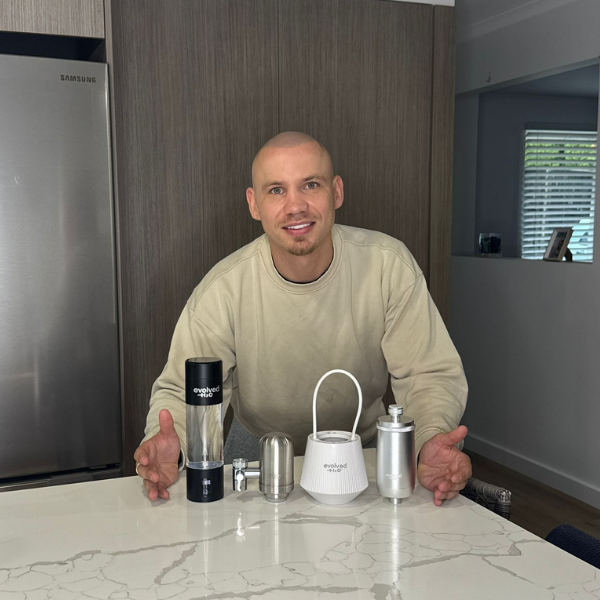
If sediment in your tap water is a concern, the Evolved H2O Advanced Tap Filter reduces over 150 common tap-water contaminants, including chlorine, PFAS, heavy metals, microplastics and sediment.
Key takeaways
- Cloudy hot water is most often caused by dissolved air released as water heats up. It clears from the bottom of a glass upward within a minute or two.
- Sediment from ageing hot water systems, corroding pipes, or mains disturbances can also cause cloudiness that takes longer to settle.
- The Australian Drinking Water Guidelines set an aesthetic turbidity limit of 5 NTU at the consumer's tap, and describe crystal-clear water as having less than 1 NTU.
- Persistent cloudiness, unusual colour, or an accompanying smell or taste is worth investigating with your water authority or a licensed plumber.
- Sediment in tap water more broadly can be addressed at the point of use.
Frequently Asked Questions
Is cloudy hot water safe to drink?
Cloudy hot water caused by dissolved air is generally harmless and clears within a minute or two. Cloudiness from sediment or particles that does not clear, or that comes with an unusual colour or smell, is worth investigating before drinking. If you are unsure, contact your local water authority for guidance. This article does not constitute medical or health advice.
Why does my hot water look milky but my cold water looks clear?
Hot water releases dissolved gases more readily than cold water does. When water is heated in your pipes or hot water system, air comes out of solution as tiny bubbles that scatter light and give the water a milky appearance. Cold water at mains pressure holds those gases in solution, so it looks clear at the tap.
How long should cloudy hot water take to clear?
If dissolved air is the cause, the cloudiness typically clears from the bottom of a glass upward within one to two minutes. The Australian Drinking Water Guidelines note that short turbidity spikes in distribution systems are considered best practice to limit to no longer than 15 minutes. Cloudiness that persists beyond that is worth investigating.
Could my hot water system be causing the cloudiness?
Yes. Storage tank water heaters accumulate sediment and mineral scale at the base over time. Heat and pressure changes can disturb that material and carry it into your tap water. Flushing your hot water system periodically is standard maintenance and can reduce sediment-related cloudiness. A licensed plumber can advise on the right schedule for your system.
What does turbidity actually mean?
Turbidity is the measure of how cloudy or hazy water appears due to suspended particles. It is measured in Nephelometric Turbidity Units (NTU). According to the Australian Drinking Water Guidelines, water at 5 NTU appears slightly muddy or milky in a glass, while crystal-clear water is typically below 1 NTU.
Does boiling cloudy hot water fix the problem?
Boiling will not address cloudiness caused by sediment or fine particles. If the cloudiness is from dissolved air, the water will already clear on its own as it cools or sits. Boiling does not reliably address sediment, rust, or mineral particles. If your water is persistently cloudy, identifying the source is a more useful first step than boiling.
Sources