Quick answer: No, boiling water does not take fluoride out. Fluoride is a dissolved mineral, not a volatile compound, so it does not evaporate when water is heated. Boiling actually reduces the volume of water through steam loss, which can leave the remaining water with a slightly higher fluoride concentration than when you started.

Why boiling does not remove fluoride from water
Boiling is effective at certain things: it can kill many biological contaminants and it drives off some volatile compounds. Fluoride, however, behaves differently. It is a dissolved ionic mineral, and its boiling point is far above the temperature of boiling water. When you boil a kettle or a pot of water, the water molecules turn to steam and escape, but the fluoride ions stay behind in the liquid that remains.
The practical result is that the longer you boil, and the more water you lose to steam, the more concentrated the fluoride in the remaining water becomes. Boiling is therefore not a useful method for reducing fluoride, and relying on it for that purpose would be misleading.
This is worth understanding clearly, because boiling is often suggested as a general water-safety measure. It has genuine uses, but fluoride reduction is not one of them.
What levels of fluoride are in Australian tap water?
Australian tap water is fluoridated by water authorities under legislation and health guidelines. According to health.vic.gov.au, in Victoria the maximum level of fluoride in drinking water is 1 milligram per litre (mg/L), or 1 part per million (ppm), as recommended by the World Health Organization.
Yarra Valley Water notes that the acceptable fluoride concentration range for Melbourne is between 0.7 and 1.2 mg/L, with the optimum concentration being 0.9 mg/L. They also note that the amount of fluoride added to the water supply is less than one milligram per litre of water, which is proportionally equivalent to one grain of sugar in a cup of water.
For context, health.vic.gov.au points out that the amount of fluoride in children's toothpaste is 400 to 500 ppm, and regular toothpaste is 1,000 ppm, compared with the 1 ppm maximum in drinking water.
Surface water and many bore waters used for drinking can also contain concentrations of natural fluoride up to one milligram per litre, as Yarra Valley Water explains.
How is fluoride added to Australian drinking water?
Fluoridation of public water supplies in Australia is a regulated process. According to Yarra Valley Water, the amount of fluoride in your water is measured and added in accordance with guidelines set by the 1987 National Health and Medical Research Council and the Australian Water Resources Council. In Victoria, the Health (Fluoridation) Act 1973 regulates the fluoridation of drinking water supplies, and the fluoridation process adjusts the concentration of fluoride in drinking water to a value set by the Act.
Health.vic.gov.au notes that other parts of Australia have had fluoridated drinking water for more than 50 years. In New South Wales, NSW Health also oversees the fluoridation of drinking water, with technical and regulatory requirements for water authorities operating fluoridation systems.
If you want to know whether your suburb receives fluoridated water, Yarra Valley Water notes that a complete list of suburbs receiving fluoridated water in Victoria is available on the Department of Health and Human Services website.
What about other common methods people try?
Boiling is the most commonly suggested home remedy for water concerns, but it is not the only method people ask about when it comes to fluoride. Filtering through a standard carbon or activated carbon filter, for example, is designed to address chlorine, taste and odour, and sediment. Fluoride is a different type of dissolved mineral and behaves differently in water treatment.
The key point is that fluoride is a stable dissolved ion. Methods that work by physical straining, adsorption of organic compounds, or heat alone are not designed to address it. Understanding the chemistry of what you are trying to reduce matters when choosing an approach.
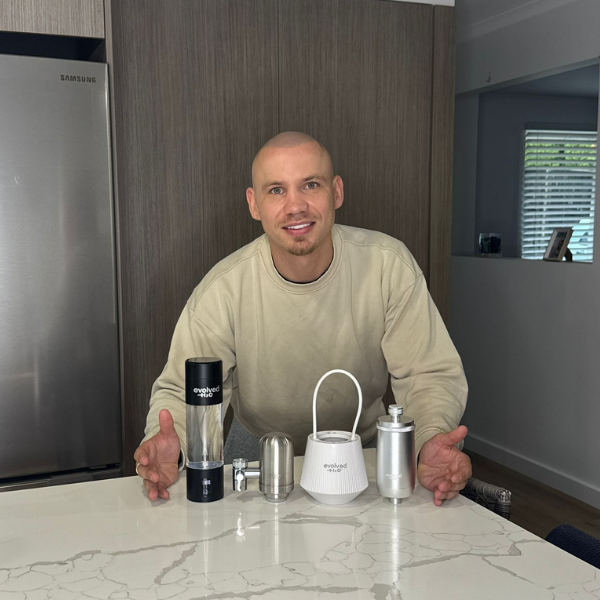
If reducing fluoride in your drinking water is a priority, the HydroX Electric Water Filter is designed to reduce up to 98% of fluoride. Actual reduction depends on your water conditions and how the filter is used.
Key takeaways
- Boiling water does not remove fluoride. Because fluoride is a dissolved mineral ion, it remains in the water while steam escapes, which can slightly increase its concentration.
- Australian tap water is fluoridated under legislation and health guidelines. In Victoria, the maximum is 1 mg/L (1 ppm), as noted by health.vic.gov.au.
- Fluoride levels in drinking water are far lower than those in toothpaste, which contains 400 to 1,000 ppm depending on the product.
- If fluoride reduction in drinking water is your goal, the HydroX Electric Water Filter can reduce up to 98% of fluoride, with actual results depending on your water conditions and usage.
Frequently Asked Questions
Does boiling water increase fluoride concentration?
It can, slightly. When water boils, some of it is lost as steam. The fluoride, being a dissolved mineral, stays behind in the remaining water. The more water that evaporates, the more concentrated the fluoride in what is left. Boiling is not a method for reducing fluoride.
What is the fluoride level in Melbourne tap water?
According to Yarra Valley Water, the acceptable range for Melbourne is between 0.7 and 1.2 mg/L, with an optimum of 0.9 mg/L. The maximum in Victoria is 1 mg/L (1 ppm), as noted by health.vic.gov.au.
Is fluoride in tap water the same as fluoride in toothpaste?
Fluoride is the same ion, but the concentrations are very different. Health.vic.gov.au notes that children's toothpaste contains 400 to 500 ppm of fluoride and regular toothpaste contains 1,000 ppm, compared with the 1 ppm maximum in Victorian drinking water.
Does a standard carbon filter remove fluoride from drinking water?
Standard activated carbon filters are designed to reduce chlorine, sediment, and associated taste and odour. Fluoride is a dissolved mineral ion and behaves differently. No approved claim is made here for carbon filtration and fluoride. If fluoride reduction is your priority, the HydroX Electric Water Filter is designed to reduce up to 98% of fluoride, with actual reduction depending on your water conditions and how the filter is used.
Is fluoridated tap water regulated in Australia?
Yes. In Victoria, the Health (Fluoridation) Act 1973 regulates the fluoridation of drinking water, as noted by Yarra Valley Water. In New South Wales, NSW Health oversees fluoridation requirements for water authorities.
Can I find out if my suburb receives fluoridated water?
Yes. Yarra Valley Water notes that a complete list of suburbs receiving fluoridated water in Victoria is available on the Department of Health and Human Services website. For other states, contact your local water authority or state health department.
Sources
- Fluoridation | Yarra Valley Water
- Water fluoridation in Victoria | health.vic.gov.au
- Fluoridation of drinking water | NSW Health