Quick answer: To test your drinking water for mercury in Australia, collect a water sample and send it to an accredited laboratory for analysis. The standard method is cold vapour atomic absorption spectrometry. Most Australian reticulated tap water contains mercury well below the national guideline value of 0.001 mg/L, but testing gives you a confirmed result for your specific supply.

Why would you test drinking water for mercury?
Mercury is a naturally occurring heavy metal that can enter water supplies through geological sources, industrial activity, and the breakdown of organic matter. For most Australians on a reticulated (mains) supply, mercury concentrations are very low. According to the Australian Drinking Water Guidelines, in major Australian reticulated supplies the concentrations of total mercury range up to 0.001 mg/L, with typical concentrations usually less than 0.0001 mg/L.
Even so, some households have good reasons to test. These include older plumbing, a private bore or rainwater tank, proximity to industrial sites, or simply wanting a confirmed baseline for their water quality. Testing is the only way to know your actual result.
What is the Australian guideline value for mercury in drinking water?
Australia has a clear national standard. The Australian Drinking Water Guidelines state that, based on health considerations, the concentration of total mercury in drinking water should not exceed 0.001 mg/L. This is the figure that applies today.
The guideline is set with protective intent. The Australian Drinking Water Guidelines note that the guideline value should be sufficient to protect pregnant women and nursing mothers, who are at greatest risk from the adverse effects of methyl mercury. This means the standard is designed with the most sensitive groups in mind.
For context on overall exposure, the Australian Drinking Water Guidelines also note that the average Australian adult dietary intake of mercury is approximately 0.004 mg per day, with drinking water typically contributing a small fraction of that total.
How is mercury measured in drinking water?
Mercury testing requires specialist laboratory equipment. The Australian Drinking Water Guidelines state that the concentration of total mercury in drinking water can be determined by the cold vapour atomic absorption method (APHA 3500-Hg Part B 1992). This is a highly sensitive analytical technique capable of detecting mercury at very low concentrations.
Because this method requires laboratory-grade instruments, mercury cannot be reliably measured with a basic home test strip. A professional laboratory analysis is the appropriate approach.
How to get your drinking water tested for mercury
The process for testing your drinking water for mercury follows a straightforward sequence.
- Contact an accredited laboratory. Look for a laboratory accredited by the National Association of Testing Authorities (NATA) in Australia. Many state and territory health departments publish lists of approved water testing laboratories. Contact the lab first to request a mercury-specific test and to receive their sample collection instructions.
- Collect your sample correctly. The laboratory will provide a clean, pre-treated sample bottle and specific instructions. For a tap water test, you will typically be asked to flush the tap for a set period before collecting the sample, or to collect a first-draw sample without flushing, depending on what you want to measure. Follow the instructions exactly, as incorrect collection can affect results.
- Preserve and transport the sample promptly. Mercury samples often require a preservative (such as nitric acid, added by the lab to the bottle in advance) and must be kept cool and delivered to the laboratory within the specified holding time. Check the lab's requirements before you collect.
- Receive and interpret your results. The laboratory will report your result in mg/L (milligrams per litre). Compare it against the national guideline value of 0.001 mg/L. If your result is below this figure, your water is within the Australian guideline. If it exceeds the guideline, contact your local water authority or a qualified water quality professional for advice.
Who should consider testing?
For households connected to a major reticulated supply, routine mercury testing is generally not necessary, given that typical concentrations are well below the guideline. However, testing is worth considering in the following situations.
- You rely on a private bore, well, or rainwater tank, particularly in areas with known geological or industrial mercury sources.
- Your property has older plumbing or fittings that may introduce contaminants.
- You are pregnant, nursing, or have young children and want a confirmed baseline for your water quality.
- You have received a notice from your water authority about a water quality event in your area.
- You are purchasing a property and want to understand the water quality before moving in.
If you are on a reticulated supply and have concerns, your state or territory water authority is a good first point of contact. They conduct regular monitoring and can advise on local water quality data.
What if your test result shows elevated mercury?
If a laboratory result shows mercury above the guideline value of 0.001 mg/L, the appropriate steps are to stop using that water for drinking and cooking, contact your local water authority or a licensed plumber to investigate the source, and seek advice from a qualified water quality professional. Do not attempt to interpret a high result in isolation. This article does not constitute medical or health advice; if you have concerns about personal exposure, speak with a qualified health professional.
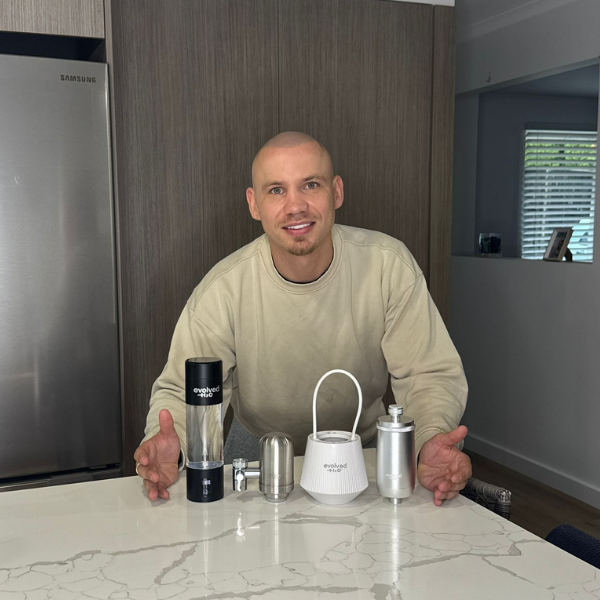
For households who want an additional layer of filtration for their everyday drinking water, the Evolved H2O 3.5L Glass Water Filter Jug reduces mercury by 95.5%.
Key takeaways
- Testing drinking water for mercury requires an accredited laboratory using cold vapour atomic absorption analysis.
- The Australian guideline value for total mercury in drinking water is 0.001 mg/L, as set by the Australian Drinking Water Guidelines.
- Typical concentrations in major Australian reticulated supplies are well below this guideline.
- The guideline is designed to protect the most sensitive groups, including pregnant women and nursing mothers.
- Home test strips are not a reliable method for mercury; always use a NATA-accredited laboratory.
- If your result exceeds the guideline, contact your water authority or a qualified professional for guidance.
Sources
Frequently Asked Questions
Can I test my drinking water for mercury at home?
Not reliably. Mercury requires sensitive laboratory equipment, specifically cold vapour atomic absorption analysis, to detect at the low concentrations relevant to drinking water. Basic home test strips are not designed for this level of precision. For an accurate result, send a sample to a NATA-accredited laboratory and follow their sample collection instructions carefully.
What is the safe level of mercury in Australian drinking water?
The Australian Drinking Water Guidelines state that, based on health considerations, the concentration of total mercury in drinking water should not exceed 0.001 mg/L. This guideline is set to protect the most sensitive groups, including pregnant women and nursing mothers.
How common is mercury in Australian tap water?
Mercury is generally present at very low levels in Australian reticulated supplies. According to the Australian Drinking Water Guidelines, concentrations in major supplies range up to 0.001 mg/L, with typical concentrations usually less than 0.0001 mg/L. Private bores and rainwater tanks may carry different risks and are worth testing independently.
How long does a mercury water test take?
Turnaround times vary by laboratory, but most accredited labs in Australia return results for mercury analysis within five to ten business days. Some offer expedited testing for an additional fee. Contact your chosen laboratory before collecting your sample to confirm their current turnaround time and any specific sample preservation requirements.
Does boiling water reduce mercury?
Boiling water does not reliably reduce mercury. Because mercury is a dissolved metal rather than a biological contaminant, boiling is not an effective treatment method. In fact, boiling can concentrate dissolved metals slightly as water evaporates. If your test result shows elevated mercury, seek advice from a qualified water quality professional rather than relying on boiling.
Is mercury in drinking water a concern for pregnant women?
The Australian Drinking Water Guidelines note that the guideline value should be sufficient to protect pregnant women and nursing mothers, who are at greatest risk from the adverse effects of methyl mercury. This article does not provide medical advice. If you have specific concerns during pregnancy, speak with a qualified health professional.