Quick answer: The most practical way to address heavy metals in your drinking water is to use a point-of-use filter with an approved claim for the metals you are concerned about. Australian Drinking Water Guidelines set maximum concentrations for metals such as arsenic (0.01 mg/L), cadmium (0.002 mg/L), hexavalent chromium (0.05 mg/L), copper (2 mg/L) and manganese (0.1 mg/L). Most reticulated supplies in Australia stay well within these limits, but older plumbing, local geology and source water variation can all affect what comes out of your tap.

Why heavy metals in drinking water matter
Heavy metals are naturally occurring elements found in soil, rock and sediment. They can enter drinking water through natural geological processes, industrial activity, agricultural runoff, or from the pipes and fittings inside your own home. The Australian Drinking Water Guidelines, published by guidelines.nhmrc.gov.au, set health-based guideline values for a range of metals to help water authorities and households understand what concentrations are considered acceptable.
For most Australians connected to a reticulated supply, treated water meets these guidelines before it leaves the treatment plant. The concern for many households is what happens between the treatment plant and the tap, particularly in homes with older copper or galvanised steel plumbing, or in areas where source water has naturally elevated mineral content.
What the Australian guidelines say about common heavy metals
The Australian Drinking Water Guidelines provide specific guideline values for each metal. Understanding these figures helps you put your own water quality in context.
Arsenic
According to guidelines.nhmrc.gov.au, typical concentrations of arsenic in Australian drinking water supplies range from 0.001 mg/L to 0.03 mg/L. In surface and groundwater not affected by arsenic mineral deposits or pollution, the concentration is generally less than 0.005 mg/L. The Australian guideline value for arsenic in drinking water is 0.01 mg/L, consistent with the values adopted by the European Union, WHO, Health Canada, the USEPA and New Zealand. The guidelines note that based on human health considerations, the concentration of arsenic in drinking water should not exceed 0.01 mg/L.
Cadmium
As guidelines.nhmrc.gov.au states, in major Australian reticulated supplies concentrations of cadmium are usually less than 0.002 mg/L. Cadmium concentrations in non-polluted natural waters overseas are usually lower than 0.001 mg/L. Based on health considerations, the concentration of cadmium in drinking water should not exceed 0.002 mg/L. The guideline value takes into account the higher cadmium intake, per kilogram of body weight, by infants and children.
Chromium
According to guidelines.nhmrc.gov.au, in major Australian reticulated supplies concentrations of total chromium range up to 0.03 mg/L, with typical concentrations usually less than 0.005 mg/L. Based on health considerations, the concentration of hexavalent chromium (Cr(VI)) in drinking water should not exceed 0.05 mg/L. The guidelines note that if concentrations of total chromium exceed the guideline value, separate analyses for Cr(VI) and Cr(III) are recommended.
Copper
As guidelines.nhmrc.gov.au states, copper is present in uncontaminated surface waters at very low concentrations, usually less than 0.01 mg/L. In major Australian reticulated supplies, total copper concentrations range up to 0.8 mg/L, with typical concentrations of about 0.05 mg/L. Based on health considerations, the concentration of copper in drinking water should not exceed 2 mg/L, and based on aesthetic considerations it should not exceed 1 mg/L. Copper levels in household water can be elevated by copper plumbing, particularly when water sits in pipes overnight.
Manganese
According to guidelines.nhmrc.gov.au, in major Australian reticulated drinking water supplies, manganese concentrations have been found up to 0.8 mg/L, with typical concentrations less than 0.03 mg/L. Based on health considerations, the concentration of manganese in drinking water should not exceed 0.1 mg/L. Based on aesthetic considerations, it should not exceed 0.05 mg/L measured at the customer's tap. The guidelines also note that water authorities are encouraged to keep manganese concentrations as low as possible, preferably below 0.02 mg/L at the treatment plant.
Where heavy metals in tap water come from
Understanding the source of heavy metals in your water helps you decide whether action is warranted and what kind of action makes sense.
- Natural geology: Groundwater and surface water can pick up arsenic, manganese and other metals from surrounding rock and soil, particularly in areas with naturally mineralised geology.
- Older plumbing: Copper pipes, brass fittings and older solder joints can contribute copper and lead to water that sits in the pipes, especially first-draw water in the morning.
- Industrial and agricultural activity: Cadmium and chromium can enter water sources through industrial discharge or fertiliser runoff in some regions.
- Distribution infrastructure: Older water mains and service connections can introduce metals between the treatment plant and your property boundary.
If you are concerned about your specific water supply, your state or territory water authority publishes annual water quality reports that include metal concentrations measured at various points in the distribution network. Checking your local report is a practical first step.
Practical steps to reduce heavy metals in your drinking water
There are several straightforward actions Australian households can take to reduce their exposure to heavy metals in drinking water.
Flush your tap before drinking
If water has been sitting in household pipes overnight, running the cold tap for 30 to 60 seconds before filling a glass or kettle can help flush out water that has been in contact with plumbing fittings for an extended period. This is a simple, no-cost step that is particularly relevant for copper plumbing.
Use cold water for drinking and cooking
Hot water dissolves metals from pipes and fittings more readily than cold water. Using cold water from the tap for drinking, cooking and making infant formula, and then heating it separately, is a sensible precaution in homes with older plumbing.
Have your water tested
If you rely on tank water, bore water or a private water supply, or if you have concerns about your plumbing, having your water tested by an accredited laboratory gives you a clear picture of what is actually present. Your state or territory health department can advise on accredited testing services.
Use a point-of-use filter with an approved claim for heavy metals
Point-of-use filtration at the tap or countertop is the most targeted approach for households that want an additional layer of reduction for heavy metals in their drinking water.
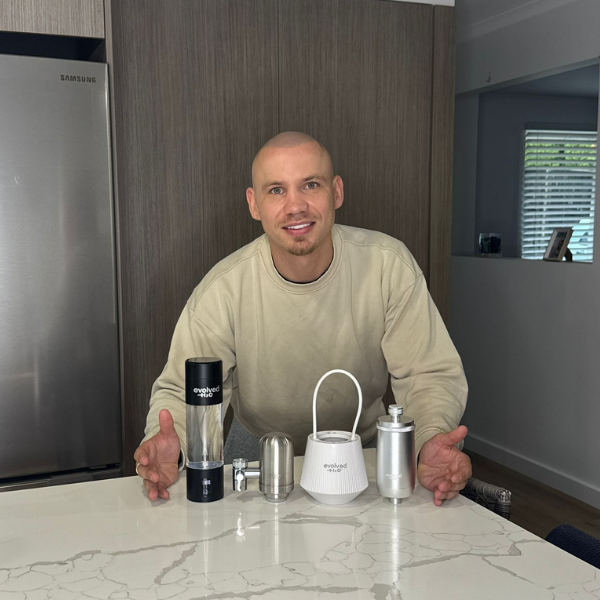
The Evolved H2O HydroX Electric Water Filter reduces heavy metals, with a 98.89% reduction figure stated on the product page.
The Evolved H2O Advanced Tap Filter targets PFAS, heavy metals, microplastics and chlorine.
The Evolved H2O 3.5L Glass Water Filter Jug reduces metals.
The Evolved H2O Advanced Shower Filter helps reduce chlorine, heavy metals and sediment.
The Evolved H2O Advanced Bath Filter blocks chlorine, heavy metals and harsh chemicals.
How to choose the right approach for your household
Not every household needs the same solution. Consider the following when deciding what action to take.
- Check your local water quality report first. Most Australian water authorities publish annual reports with metal concentrations. If your supply consistently meets guideline values, your risk from the distribution network is low.
- Consider your plumbing age and type. Homes built before the 1970s may have older solder or galvanised steel pipes. Copper plumbing of any age can contribute copper to first-draw water.
- Think about who is drinking the water. Infants, young children and pregnant women are often the focus of extra caution in drinking water guidance, as the guidelines note for cadmium.
- Decide which point of use matters most to you. If your primary concern is drinking and cooking water, a countertop or tap filter addresses that directly. If you also want to address shower or bath water, there are options designed for those uses too.
- Consider your water source. Tank water, bore water and rainwater catchment systems have different risk profiles from reticulated town water and may warrant testing before choosing a filtration approach.
Key takeaways
- The Australian Drinking Water Guidelines set health-based limits for arsenic (0.01 mg/L), cadmium (0.002 mg/L), hexavalent chromium (0.05 mg/L), copper (2 mg/L) and manganese (0.1 mg/L).
- Most reticulated Australian supplies meet these guidelines, but older plumbing and local geology can affect what reaches your tap.
- Simple steps like flushing the tap and using cold water for drinking can reduce exposure from household plumbing.
- Point-of-use filtration is the most targeted household approach for reducing heavy metals in drinking water.
- Checking your local water authority's annual report is a practical starting point for understanding your own supply.
Sources
- Arsenic | Australian Drinking Water Guidelines (guidelines.nhmrc.gov.au)
- Cadmium | Australian Drinking Water Guidelines (guidelines.nhmrc.gov.au)
- Chromium | Australian Drinking Water Guidelines (guidelines.nhmrc.gov.au)
- Copper | Australian Drinking Water Guidelines (guidelines.nhmrc.gov.au)
- Manganese | Australian Drinking Water Guidelines (guidelines.nhmrc.gov.au)
Frequently Asked Questions
Are heavy metals in Australian tap water a common problem?
For most Australians on reticulated supplies, treated water meets the Australian Drinking Water Guidelines before it leaves the treatment plant. As guidelines.nhmrc.gov.au states, typical concentrations of metals like arsenic and cadmium in major Australian supplies are well below guideline values. The greater variable for many households is older internal plumbing rather than the supply itself.
Does boiling water remove heavy metals?
Boiling water does not reduce dissolved heavy metals. In fact, boiling can concentrate metals slightly as water volume reduces through evaporation. Boiling is effective for certain microbiological concerns but is not a useful approach for addressing metals such as arsenic, cadmium, chromium, copper or manganese in drinking water.
What is the Australian guideline for arsenic in drinking water?
According to guidelines.nhmrc.gov.au, the Australian drinking water guideline for arsenic is 0.01 mg/L. This is consistent with the values adopted by the WHO, European Union, Health Canada, USEPA and New Zealand. Typical concentrations in Australian supplies range from 0.001 mg/L to 0.03 mg/L, with unaffected surface and groundwater generally below 0.005 mg/L.
Can copper pipes affect the metal content of my drinking water?
Yes. As guidelines.nhmrc.gov.au notes, in major Australian reticulated supplies total copper concentrations range up to 0.8 mg/L, with typical concentrations around 0.05 mg/L. Copper from household plumbing can contribute to first-draw water, particularly after water has sat in pipes overnight. Flushing the tap before use and using cold water for drinking are practical steps.
Is manganese in drinking water a concern?
Manganese occurs naturally in Australian water supplies. According to guidelines.nhmrc.gov.au, concentrations in major reticulated supplies have been found up to 0.8 mg/L, though typical concentrations are less than 0.03 mg/L. The health-based guideline value is 0.1 mg/L, and the aesthetic guideline is 0.05 mg/L at the customer's tap. The guidelines encourage water authorities to keep manganese as low as possible, preferably below 0.02 mg/L at the treatment plant.
What does a point-of-use filter actually do for heavy metals?
Point-of-use filters work at the tap or countertop to reduce specific contaminants in the water that passes through them. The reduction achieved depends on the filter media, the specific metals present, your water conditions and how the filter is used. Different Evolved H2O products carry different approved claims for heavy metals, so the right choice depends on which point of use matters most to you.