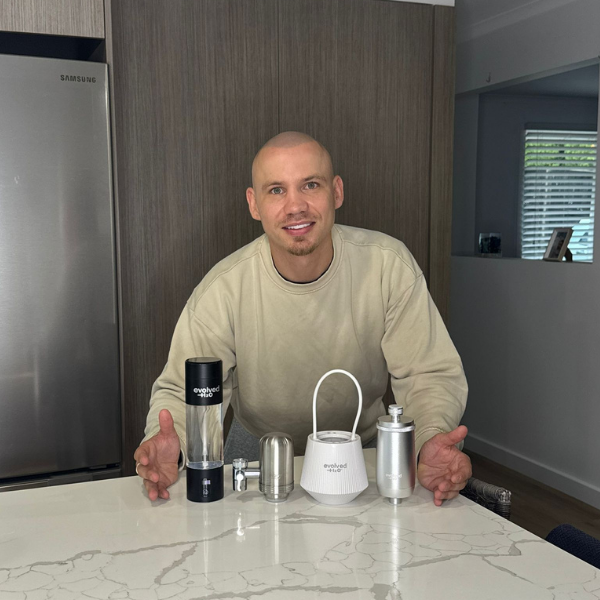
Quick answer: Most Australian tap water contains fluoride added within regulated limits set by state health authorities. If you want to reduce fluoride in your drinking water at home, point-of-use filtration is the most practical option for households. The HydroX Electric Water Filter is designed to reduce up to 98% of fluoride, though actual reduction depends on your water conditions and how the filter is used.
Why is fluoride in Australian tap water?
Fluoride is present in Australian tap water for two reasons: it occurs naturally in some source waters, and it is deliberately added by water authorities in a process called fluoridation. Understanding both helps you make an informed decision about whether and how to reduce it.
According to Yarra Valley Water, surface water and many bore waters used for drinking water can contain concentrations of natural fluoride up to one milligram per litre (mg/L). On top of that natural background, water authorities in most Australian states add fluoride deliberately.
In Victoria, the process is governed by law. Yarra Valley Water notes that the Health (Fluoridation) Act 1973 regulates the fluoridation of drinking water supplies in Victoria, and the fluoridation process adjusts the concentration of fluoride in drinking water to a value set by the Act. The amount of fluoride added is measured and added in accordance with guidelines set by the 1987 National Health and Medical Research Council and the Australian Water Resources Council.
To put the concentration in perspective, Yarra Valley Water describes the amount added as less than one milligram per litre of water, which is proportionally equivalent to one grain of sugar in a cup of water.
According to health.vic.gov.au, other parts of Australia have had fluoridated drinking water for more than 50 years.
What are the regulated fluoride levels in Australia?
Australian fluoride levels in drinking water are set and monitored by state health authorities, and they sit well below the levels associated with concern in the scientific literature.
Health.vic.gov.au states that in Victoria, the maximum level of fluoride in drinking water is 1 milligram per litre (mg/L), or 1 part per million (ppm), as recommended by the World Health Organization (WHO). For Melbourne specifically, Yarra Valley Water states that the acceptable fluoride concentration range is between 0.7 and 1.2 mg/L, with the optimum concentration being 0.9 mg/L.
To give that number context, health.vic.gov.au notes that the amount of fluoride in children's toothpaste is 400 to 500 ppm and regular toothpaste is 1,000 ppm, compared with the 1 ppm maximum in drinking water.
If you want to know whether your suburb receives fluoridated water, Yarra Valley Water notes that a complete list of suburbs receiving fluoridated water in Victoria is available on the Department of Health and Human Services website. For New South Wales, NSW Health provides information on fluoridation of drinking water, including a public statement on water fluoridation and human health in Australia.
What does the evidence say about fluoride at these levels?
Australian health authorities have reviewed the evidence on fluoride at the concentrations used in drinking water. Their position is that fluoridation at the regulated level is considered safe and is supported by decades of monitoring.
According to health.vic.gov.au, academic clinicians from the Department of Allergy, Immunology and Respiratory Medicine at Melbourne's Alfred Hospital have stated there is no clinical or scientific evidence that fluoridation affects allergies or immunities at the optimal 1 mg/L. The same source quotes those clinicians directly: during the past 25 years, whether in Melbourne or in the UK, they have never seen a patient with any respiratory symptoms nor any allergy-like symptoms that could be attributed to fluoride at 1 ppm as in fluoridated water.
In June 2006, as health.vic.gov.au notes, the Australian Research Centre for Population Oral Health (ARCPOH) published guidelines for Australian fluoride use.
This article does not make health recommendations. If you have specific health questions about fluoride, speak with a qualified health professional.
How to reduce fluoride in water at home
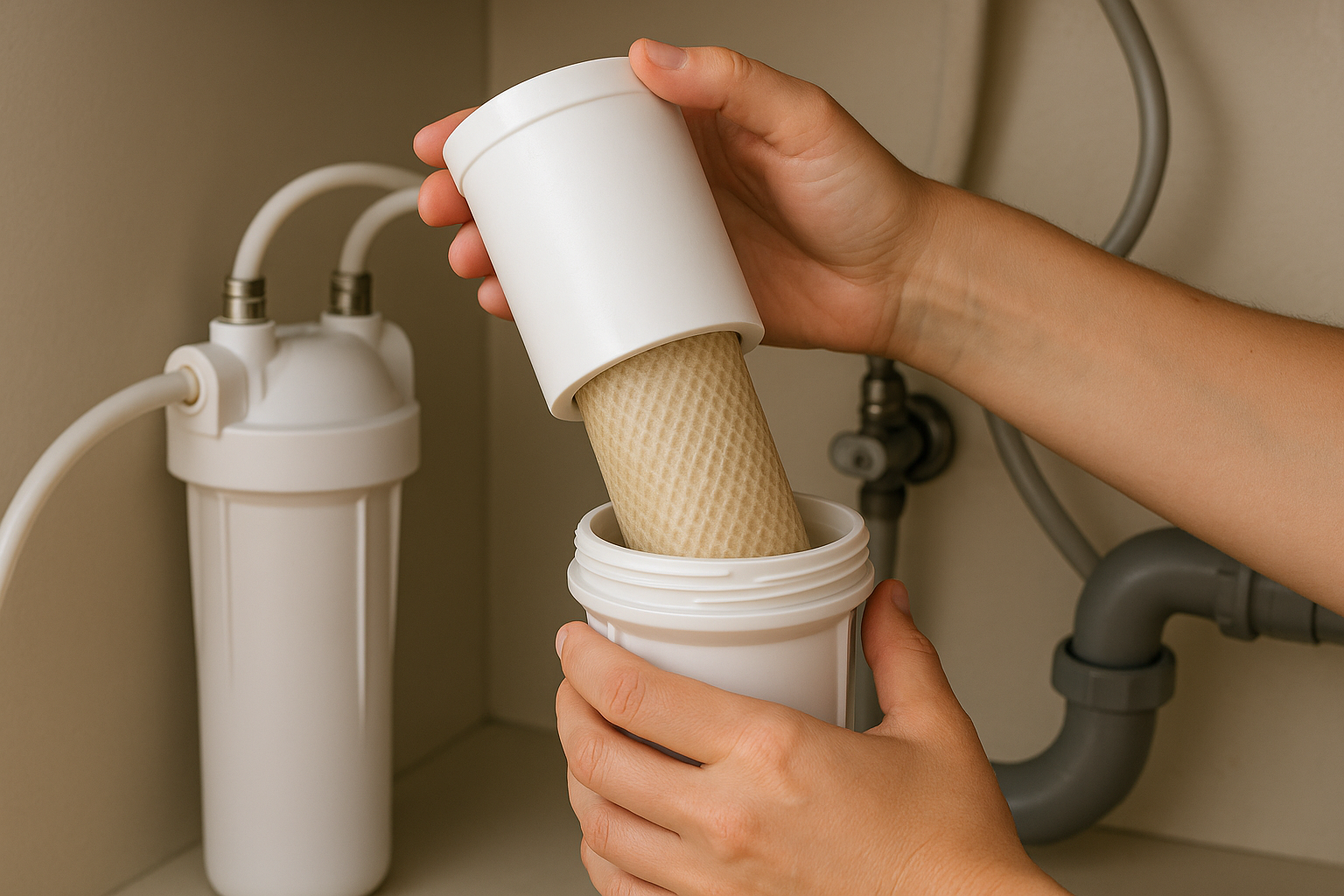
If you have decided you want to reduce the fluoride in your drinking water, point-of-use filtration at the tap or countertop is the most practical approach for Australian households. Not all home filtration methods address fluoride, so it matters which approach you use.
What to know before choosing a method
Fluoride is a small, dissolved ion. Methods that work well for taste, odour and sediment do not necessarily address dissolved fluoride. The key is understanding what a given method is designed to do, and at what level.
Common household approaches include boiling, jug filtration, and point-of-use electric or countertop filtration. Boiling water concentrates dissolved minerals including fluoride rather than reducing them, so it is not a useful method for fluoride. Standard carbon-based jug filters are generally designed for taste and odour rather than dissolved ions like fluoride. Point-of-use filtration using more advanced media is the category most relevant to fluoride reduction.
Checking your local water report
Before making any decision, it is worth checking your local water authority's annual water quality report. This will tell you the actual fluoride concentration in your area's supply, which may be lower than the regulated maximum. Your state health authority's website is the best starting point: health.vic.gov.au for Victoria and NSW Health for New South Wales.
The HydroX Electric Water Filter
The HydroX Electric Water Filter is designed to reduce up to 98% of fluoride. Actual reduction depends on your water conditions and how the filter is used. This is the Evolved H2O option for households where fluoride reduction is a priority.
How to choose the right approach for your household
Use this checklist to think through your decision before committing to any method.
- Check your local water report first. Find out the actual fluoride concentration in your supply. Your state water authority publishes this data.
- Be clear about your goal. Are you looking to reduce fluoride specifically, or are taste and odour your main concern? Different methods address different things.
- Consider where you want filtered water. Point-of-use filtration at the kitchen tap or countertop is the most targeted approach for drinking water.
- Think about ongoing maintenance. Any filtration system requires cartridge replacement at intervals. Factor this into your decision.
- Understand what the method is designed to do. Not every filter addresses fluoride. Confirm what a given product is designed for before purchasing.
- Speak to a health professional if you have specific health concerns. This article is informational only and is not medical advice.
Key takeaways
- Fluoride is added to most Australian tap water within limits set by state health authorities, typically at or below 1 mg/L.
- In Melbourne, Yarra Valley Water states the acceptable range is 0.7 to 1.2 mg/L, with an optimum of 0.9 mg/L.
- Boiling water does not reduce fluoride and may concentrate it.
- Point-of-use filtration is the most practical household approach for fluoride reduction.
- The HydroX Electric Water Filter is designed to reduce up to 98% of fluoride, with actual results depending on water conditions and usage.
- Check your local water authority's annual report to understand the fluoride level in your specific supply.
Sources
- Fluoridation | Yarra Valley Water
- Water fluoridation in Victoria | health.vic.gov.au
- Fluoridation of drinking water | NSW Health