Quick answer: According to the Australian Drinking Water Guidelines, turbidity in drinking water should not exceed 5 NTU (Nephelometric Turbidity Units) at the consumer's tap for aesthetic reasons, and should be below 1 NTU at the point of disinfection. Crystal-clear water typically measures below 1 NTU.

Why turbidity in drinking water is measured
Turbidity is a measure of how cloudy or hazy water appears, caused by suspended particles such as sediment, silt, clay, algae, or organic matter. It is one of the most straightforward indicators of water clarity, and water authorities in Australia monitor it closely because elevated turbidity can affect both the appearance of water and the effectiveness of treatment processes.
The unit used to measure turbidity is the Nephelometric Turbidity Unit, or NTU. The higher the NTU reading, the cloudier the water. Understanding what different NTU values look like in practice helps put the guidelines into context.
What the Australian Drinking Water Guidelines say about turbidity levels
The Australian Drinking Water Guidelines set out two key turbidity benchmarks: one for aesthetic quality at the tap, and one related to disinfection effectiveness.
The aesthetic limit at the tap: 5 NTU
Based on aesthetic considerations, the Australian Drinking Water Guidelines state that turbidity should not exceed 5 NTU at the consumer's tap. At this level, water appears slightly muddy or milky in a glass. To put that in perspective, the same guidelines note that at 60 NTU it is not possible to see through the water at all.
For most households, tap water that looks clear and clean will sit well below this threshold. The 5 NTU figure is a ceiling, not a target.
Crystal-clear water: below 1 NTU
The Australian Drinking Water Guidelines describe water with a turbidity of less than 1 NTU as appearing crystal-clear. This is the standard most Australians would associate with high-quality tap water straight from a well-managed supply.
The disinfection threshold: less than 1 NTU
Turbidity matters beyond appearance. The Australian Drinking Water Guidelines state that a turbidity of less than 1 NTU is desirable at the time of disinfection with chlorine, unless a higher value can be validated in a specific context. This is because suspended particles can shield microorganisms from disinfectants, reducing treatment reliability.
The guidelines also note that it has been demonstrated in pilot-scale trials that reducing filter effluent turbidity from 1.0 through 0.5 to 0.3 NTU would not significantly improve the reliability of pathogen control. In other words, once water is below 1 NTU, further reductions in turbidity alone do not meaningfully change disinfection outcomes.
Short spikes in turbidity: what is considered acceptable
Water supplies can experience brief increases in turbidity, particularly after heavy rainfall or disturbances to source water. The Australian Drinking Water Guidelines acknowledge this and state that it is considered best practice to limit these short spikes in turbidity to no longer than 15 minutes. Water utilities are expected to manage and minimise these events as part of their treatment and monitoring obligations.
A practical guide to what different NTU values look like
It can be helpful to visualise what turbidity readings actually mean in a glass of water. The Australian Drinking Water Guidelines provide the following reference points:
- Below 1 NTU: Crystal-clear water, the standard for well-treated supplies.
- 5 NTU: Water appears slightly muddy or milky in a glass.
- 60 NTU: Water is opaque; it is not possible to see through it.
Most treated Australian tap water sits well below 1 NTU under normal conditions. If your tap water looks noticeably cloudy, it is worth contacting your local water authority to ask whether there is a known event affecting supply in your area.
What causes turbidity in household tap water
Even when a water utility delivers water within guideline limits, turbidity can increase between the treatment plant and your tap. Common causes include:
- Sediment or rust from ageing pipes and plumbing fittings
- Disturbance of sediment in service lines after maintenance work or pressure changes
- Seasonal changes in source water quality, particularly after heavy rainfall
- Air bubbles, which can cause a temporary milky appearance that clears quickly from the bottom of a glass upward
Air bubbles are not turbidity in the technical sense and are harmless. True turbidity from sediment or particles will not clear in the same way.
Turbidity and sediment in your drinking water
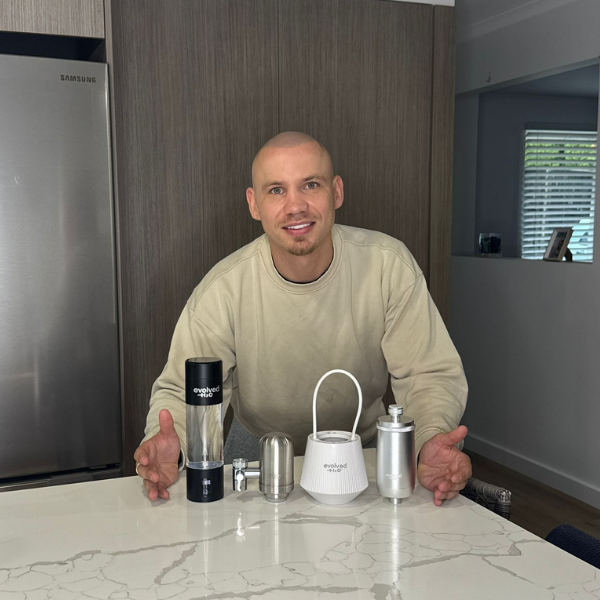
If you notice persistent cloudiness or visible sediment in your tap water, the Evolved H2O Advanced Tap Filter reduces over 150 common tap-water contaminants, including chlorine, PFAS, heavy metals, microplastics and sediment.
Key takeaways
- The Australian aesthetic guideline for turbidity at the tap is no more than 5 NTU.
- Crystal-clear water typically measures below 1 NTU.
- Less than 1 NTU is the desirable level at the point of chlorine disinfection.
- Short turbidity spikes in supply should be limited to no longer than 15 minutes as best practice.
- Visible cloudiness that does not clear quickly is worth reporting to your local water authority.
Frequently Asked Questions
What does NTU stand for in water quality?
NTU stands for Nephelometric Turbidity Unit. It is the standard measurement used to describe how cloudy or hazy water is, based on how much light is scattered by suspended particles. The higher the NTU value, the cloudier the water. Australian drinking water guidelines use NTU as the primary unit for turbidity measurement.
Is 5 NTU safe to drink?
The Australian Drinking Water Guidelines set 5 NTU as the aesthetic limit at the consumer's tap, meaning water at this level may appear slightly cloudy or milky. The guidelines do not classify 5 NTU as unsafe, but it is the upper boundary for acceptable appearance. Most well-treated Australian tap water sits well below this level under normal conditions.
Why does turbidity matter for disinfection?
Suspended particles in water can shield microorganisms from disinfectants such as chlorine, reducing the effectiveness of treatment. The Australian Drinking Water Guidelines state that turbidity below 1 NTU is desirable at the point of disinfection. This is why water utilities monitor and manage turbidity as part of their treatment process, not just for appearance.
What causes my tap water to look cloudy?
Cloudy tap water can result from air bubbles, sediment disturbed in pipes, rust from ageing plumbing, or changes in source water quality after rainfall. Air bubbles clear quickly from the bottom of a glass upward and are harmless. Persistent cloudiness that does not clear may indicate sediment or particles and is worth reporting to your local water authority.
How long can turbidity spikes last in a water supply?
The Australian Drinking Water Guidelines state that it is considered best practice to limit short spikes in turbidity to no longer than 15 minutes. Water utilities are expected to manage these events as part of their treatment and monitoring obligations. If you notice prolonged cloudiness in your supply, contact your local water authority.
Sources