Quick answer: Cloudy tap water is most often caused by tiny air bubbles or fine sediment disturbed in the pipes. Run the cold tap for 30 to 60 seconds. If the cloudiness clears from the bottom of the glass upward, it is air and is harmless. If it stays cloudy or settles as a fine layer, sediment or a pipe issue is more likely and is worth investigating further.

Why does tap water go cloudy?
Cloudy tap water nearly always has one of a handful of causes, and most of them are temporary. Understanding which cause you are dealing with tells you exactly what to do next.
The cloudiness you see is measured scientifically as turbidity, expressed in Nephelometric Turbidity Units (NTU). According to the Australian Drinking Water Guidelines (NHMRC), water with a turbidity of 5 NTU appears slightly muddy or milky in a glass, while at 60 NTU it is not possible to see through the water at all. By contrast, crystal-clear water usually has a turbidity of less than 1 NTU.
The Australian Drinking Water Guidelines set an aesthetic guideline that turbidity should not exceed 5 NTU at the consumer's tap. This is an aesthetic standard, not a health limit, meaning water above this level may look or taste unpleasant but is not automatically unsafe.
What are the most common causes of cloudy tap water?
Identifying the cause is the first step toward fixing it. Here are the most common reasons Australian households see cloudy water from the tap.
Dissolved air bubbles
This is the most frequent cause and the most harmless. When water is under pressure in the pipes and then released at the tap, dissolved air forms tiny bubbles that make the water look white or milky. Fill a glass and watch it: if the cloudiness clears from the bottom upward within a minute or two, dissolved air is the cause. No action is needed beyond running the tap briefly.
Sediment and fine particles
Fine particles of sand, silt, rust or mineral deposits can enter the water supply through ageing pipes, nearby construction, or pressure changes in the mains. If the cloudiness does not clear quickly, or if a fine layer settles at the bottom of the glass, sediment is the more likely explanation. This type of cloudiness may persist and is worth reporting to your water authority if it continues.
Pipe disturbance and pressure changes
Work on local water mains, a burst pipe nearby, or a sudden change in water pressure can stir up sediment that has settled inside older pipes. The Australian Drinking Water Guidelines note that short spikes in turbidity are considered best practice to limit to no longer than 15 minutes. If your water clears within that window after a disturbance, the cause is almost certainly a temporary pressure event.
Treatment plant or distribution changes
Water utilities occasionally adjust treatment processes or flush mains, which can temporarily raise turbidity at the tap. Turbidity also matters at the treatment stage: the Australian Drinking Water Guidelines state that a turbidity of less than 1 NTU is desirable at the time of disinfection with chlorine, unless a higher value can be validated in a specific context. This reflects how turbidity can affect the effectiveness of disinfection processes at the treatment plant level.
How to fix cloudy water from tap: a step-by-step approach
Work through these steps in order. Most cases of cloudy tap water resolve at step one or two.
- Run the cold tap for 30 to 60 seconds. Let the water flow into a clear glass and watch what happens. If it clears from the bottom up, dissolved air is the cause and no further action is needed.
- Check whether it is only the cold tap or both taps. Cloudiness only in the hot water can point to your hot water system. Cloudiness in both taps suggests a mains or pipe issue.
- Check with a neighbour. If a neighbour has the same issue, the cause is almost certainly in the shared mains supply rather than your internal plumbing.
- Contact your water authority. If the cloudiness persists beyond 15 to 20 minutes, or if it returns regularly, report it to your local water utility. They can check for main breaks, pressure events or treatment changes in your area.
- Inspect your internal plumbing. Older galvanised steel pipes can corrode and shed rust particles. If your home has older plumbing and the cloudiness is rust-coloured or brownish rather than white, a licensed plumber can assess whether pipe replacement is warranted.
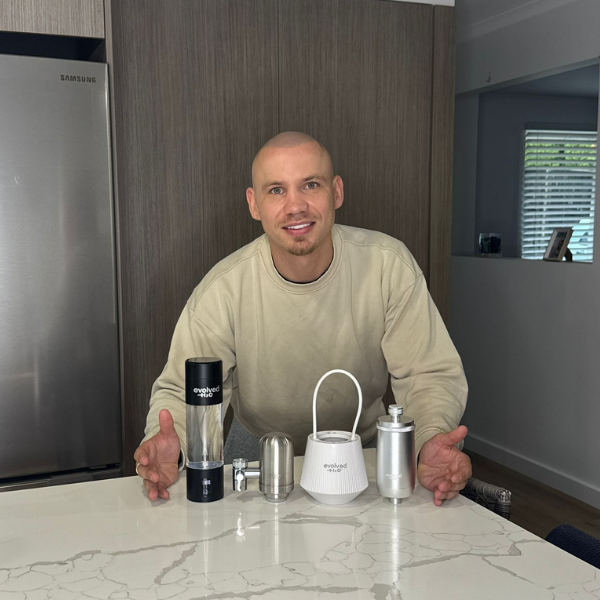
- Consider a point-of-use tap filter for ongoing sediment. If sediment is a recurring issue at your tap, the Evolved H2O Advanced Tap Filter reduces over 150 common tap-water contaminants, including chlorine, PFAS, heavy metals, microplastics and sediment.
When should you be concerned about cloudy tap water?
Most cloudy tap water in Australia is temporary and harmless. However, there are situations where it is sensible to take further action.
- Cloudiness that does not clear within 15 to 20 minutes after running the tap is worth reporting to your water authority.
- Cloudiness accompanied by an unusual smell or taste may indicate a different issue and should be reported promptly.
- Brownish or rust-coloured water suggests corrosion in pipes rather than air bubbles, and a plumber should assess the situation.
- Recurring cloudiness that comes and goes over days or weeks suggests a systemic issue in the local distribution network or your internal plumbing.
If you are ever uncertain about the safety of your tap water, contact your local water authority or state health department for guidance specific to your area. Do not rely on appearance alone as a measure of water safety.
What does turbidity actually mean for your water?
Turbidity is a measure of how much light is scattered by particles suspended in water. It is not a direct measure of contamination, but high turbidity can indicate the presence of fine particles that may carry other substances. The Australian Drinking Water Guidelines note that research in pilot-scale trials found that reducing filter effluent turbidity from 1.0 NTU through 0.5 NTU to 0.3 NTU would not significantly improve the reliability of pathogen control. This underlines that very low turbidity levels, while desirable aesthetically, do not necessarily translate to proportionally greater safety gains at the treatment stage.
For everyday household purposes, the key point is that water appearing slightly milky or cloudy at 5 NTU is at the upper end of the aesthetic guideline, and water that clears quickly is almost always the result of dissolved air rather than a water quality problem.
Key takeaways
- Cloudy tap water that clears from the bottom of the glass upward is caused by dissolved air and is harmless.
- The Australian Drinking Water Guidelines set an aesthetic turbidity guideline of no more than 5 NTU at the consumer's tap.
- Turbidity spikes from pipe disturbance are considered best practice to limit to no longer than 15 minutes.
- Persistent, recurring or discoloured cloudiness should be reported to your local water authority.
- For ongoing sediment at the tap, the Evolved H2O Advanced Tap Filter reduces over 150 common tap-water contaminants, including sediment.
Frequently Asked Questions
Is cloudy tap water safe to drink?
In most cases, yes. Cloudiness caused by dissolved air bubbles is harmless and clears within a minute or two. Cloudiness from sediment is usually not a health risk at low levels, but persistent or discoloured cloudiness should be reported to your water authority. If you are unsure, contact your local water utility or state health department for advice specific to your area.
How long should I run the tap before the cloudiness clears?
Run the cold tap for 30 to 60 seconds and fill a clear glass. If the cloudiness clears from the bottom upward within a minute or two, dissolved air is the cause. If it persists beyond 15 to 20 minutes, or if a fine layer settles at the bottom of the glass, a different cause such as sediment or a pipe issue is more likely.
Why is only my hot water cloudy?
Cloudiness limited to the hot tap often points to your hot water system rather than the mains supply. Air can accumulate in hot water tanks, and older systems can also shed mineral scale or sediment. If the issue is only in the hot water and persists, a licensed plumber can inspect the system.
What is turbidity and why does it matter?
Turbidity measures how much light is scattered by particles suspended in water, expressed in NTU. The Australian Drinking Water Guidelines state that water should not exceed 5 NTU at the consumer's tap for aesthetic reasons. Crystal-clear water is typically below 1 NTU. High turbidity does not automatically mean the water is unsafe, but it can indicate the presence of fine particles worth investigating.
Will a tap filter help with cloudy water from sediment?
If sediment is a recurring issue at your tap, the Evolved H2O Advanced Tap Filter reduces over 150 common tap-water contaminants, including chlorine, PFAS, heavy metals, microplastics and sediment. For cloudiness caused by dissolved air, no filter is needed as the air dissipates naturally.
When should I call my water authority about cloudy tap water?
Contact your local water authority if the cloudiness does not clear within 15 to 20 minutes of running the tap, if it is accompanied by an unusual smell or taste, if the water is brownish or rust-coloured, or if the problem recurs over several days. Your water authority can check for main breaks, pressure events or treatment changes in your area.
Sources